The Hanging of John Charles Tapner: When Guernsey Faced the End of the Gallows
In February 1854, Guernsey witnessed its final execution: the hanging of John Charles Tapner, a young English clerk whose crime, trial, and death revealed a deep tension within the island’s legal and moral landscape. Tapner’s case began with the murder of his elderly landlady, Elizabeth Saujon, a crime that shocked the community and set the stage for one of the most dramatic chapters in Channel Islands legal history.
At the time, Guernsey’s Royal Court operated under Norman customary law, a system centuries older than the English legal framework developing across the water. Jurats — respected lay judges elected from the community — presided over the proceedings. Their authority reflected an older conception of justice, one rooted in local experience rather than professional jurisprudence. When Tapner stood before them, the trial was swift, intense, and watched closely across the islands.
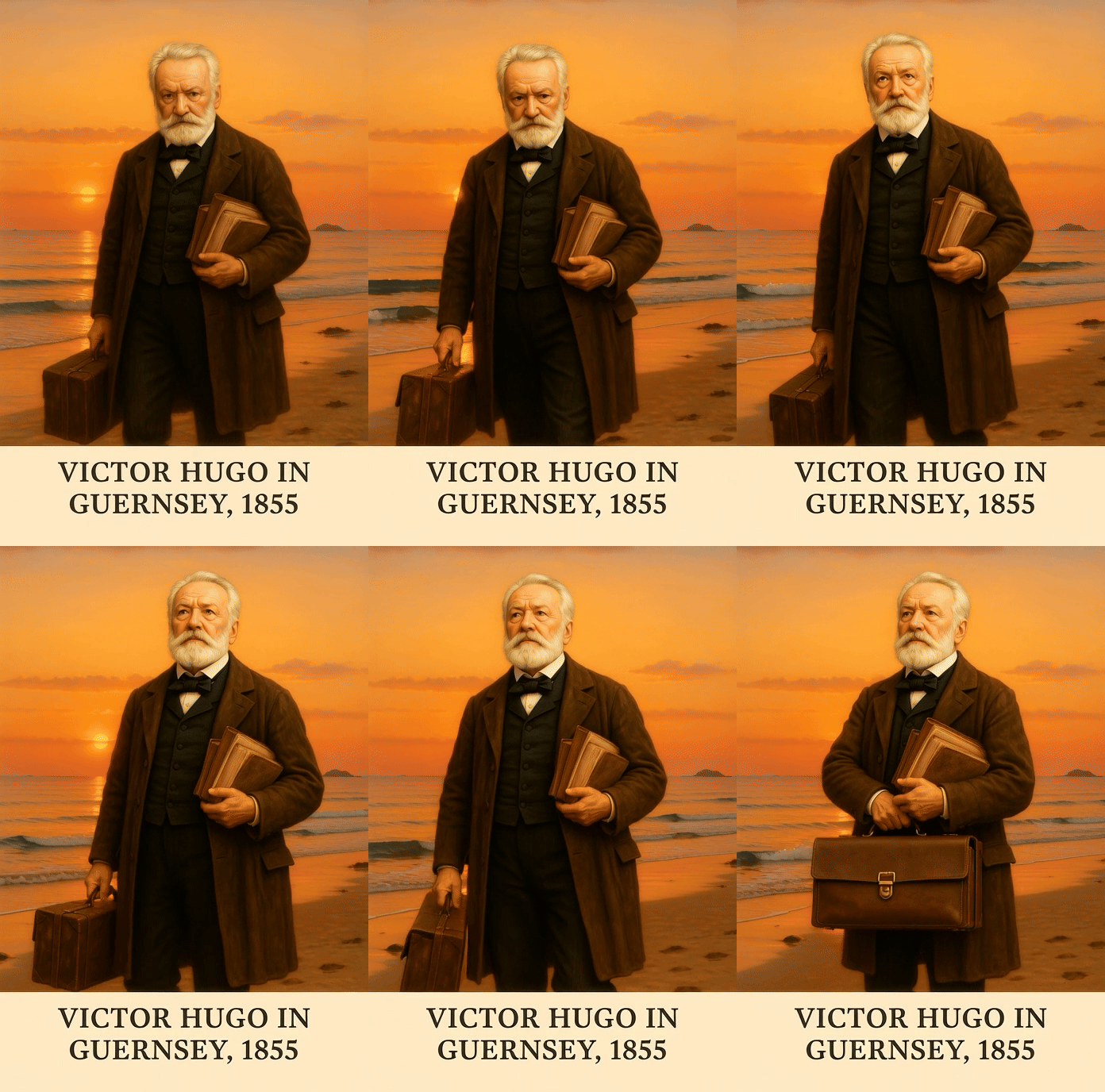
The story soon left the courtroom and entered the international arena thanks to Victor Hugo, then living in exile in Jersey. Hugo, already a towering literary figure and a committed humanitarian, seized upon the Tapner case as a moral battleground. He believed the death penalty to be a barbaric remnant of a darker age and wrote passionately to the British authorities urging clemency. His appeals to Home Secretary Lord Palmerston, filled with urgency and eloquence, argued that a modern society should not rely on the rope for justice.
Palmerston refused. Britain was in the midst of the Crimean War and needed France as an ally. Granting clemency at Hugo’s request — the request of a political exile fiercely opposed by Napoleon III — risked unnecessary diplomatic strain. The decision sealed Tapner’s fate.
The execution that followed became infamous for its brutality. The appointed hangman, inexperienced and untrained, mishandled the drop so severely that Tapner was left alive. The hangman was forced to finish the job manually. Witnesses described the scene as deeply distressing, and public reaction was immediate. Although capital punishment was never formally abolished in Guernsey at the time, the island never carried out another execution.
The shockwaves travelled beyond Guernsey. Hugo’s fierce campaign, his outrage at the botched hanging, and the wider debate it sparked all fed into his commitment to opposing the death penalty. The Tapner case echoed through his later writings, contributing to the moral arguments threaded throughout Les Misérables and beyond. The controversy even played a part in Hugo’s expulsion from Jersey later that same year, tightening the connection between the Channel Islands and his evolving political convictions.
The Tapner execution stands today not only as a tragic episode in Guernsey history but as a turning point in the island’s relationship with justice, mercy, and reform. It marked the final moment when the ancient customs of the Royal Court collided with the modern humanitarian spirit taking hold across Europe. The gallows fell silent after Tapner, and the island stepped — however quietly — into a new era.