The Tourists in Field Grey: A Snapshot of the “Model Occupation”
Date: Summer or Autumn, 1940–1941 Location: Rural Guernsey (likely St Martin or Castel) Photo Credit: Original Wehrmacht photographer (Unknown)
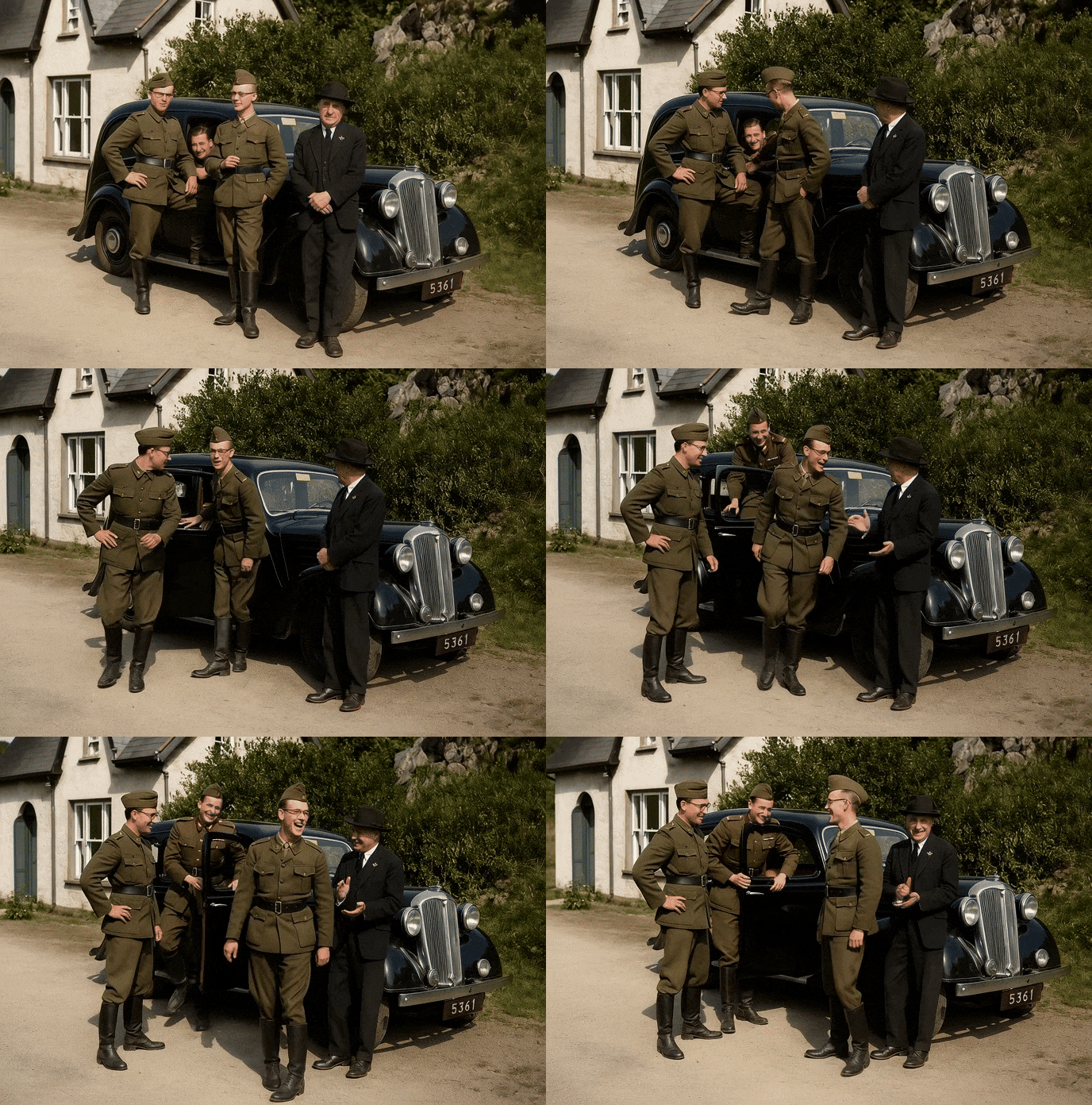
At first glance, this looks like a pleasant family road trip from a bygone era. You have a gleaming black saloon car, a sunny day in the lanes, and men smiling for the camera.
But look closer. The men leaning against the wings aren’t on holiday from the UK. They are soldiers of the German Wehrmacht. And the “family driver” is a Guernsey local, standing awkwardly with his hands clasped, waiting for his conquerors to finish their photo op.
This image is a rare, colorized window into the surreal “Honeymoon Period” of the German Occupation of the Channel Islands. Here is the true backstory behind the smiles.
1. The Timeline: Before the Hunger
The condition of the subjects tells us exactly when this was taken. The soldiers look well-fed, their uniforms are crisp, and their jackboots are polished. The car is in showroom condition, and crucially, it is running on petrol.
This places the photo almost certainly in late 1940 or 1941. Following the invasion in June 1940, the Germans attempted a “Model Occupation” to show Britain how civilized they could be. Supplies were still flowing from France, and fuel—though rationed—was available. By 1942, this photo would have been impossible: the fuel would be gone, the car would likely be running on a charcoal-burning gazogene boiler, and the mood would have shifted to grim survival.
2. The Car: A Wolseley 14/56
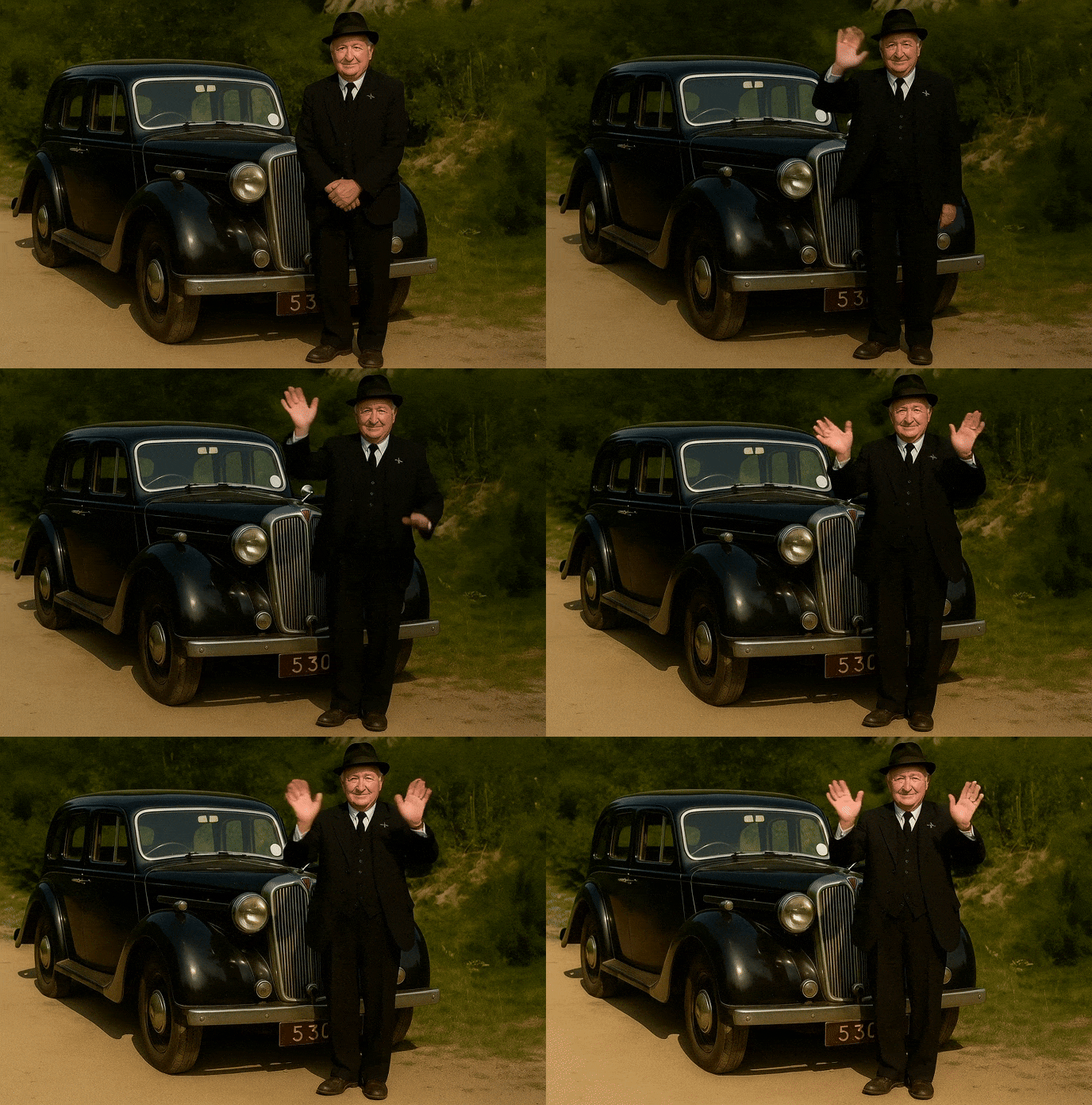
The real star of this photo is the vehicle. It is not a military car; it is a requisitioned or hired piece of local luxury.
Distinctive features—specifically the vertical slat grille and the large, standalone chrome headlamps—identify this as a Wolseley 14/56 Series II, manufactured between 1936 and 1938.
If you look closely at the top center of the chrome grille, you can see the famous Wolseley “Night-Pass” badge. This was a signature feature of the brand: a small, illuminated logo that would glow when the car was driven at night.
The license plate, 5361, is a standard sequential Guernsey registration. The number indicates the car was registered in the late 1930s, meaning it was likely the pride and joy of a wealthy local resident—perhaps a doctor or business owner—just a year or two before the Germans arrived.
3. The Soldiers: Not Officers, But “Kings for a Day”
Despite their confident poses, these men are not high-ranking officers. They are Enlisted Men or Junior NCOs of the German Army (Heer).
We know this because:
-
The Eagle: They wear the Hoheitszeichen (eagle emblem) on the right breast, marking them as Army, not Luftwaffe or SS.
-
The Collar Tabs: They wear the generic “double braid” collar tabs of the enlisted ranks, not the silver wire of officers.
-
The Boots: The soldier in the center wears flared breeches and tall riding boots. While this looks dashing, it was standard issue for dispatch riders and NCOs in the 319th Infantry Division (the unit that garrisoned the islands). He is likely enjoying a day off, flush with Occupation Marks (German currency) that gave soldiers huge buying power over the locals.
4. The Civilian: The Grey Zone
The man on the right, in his sharp suit and fedora, is the most complex figure. He is likely a local taxi driver or the owner of a hire car service.
In the early months of the Occupation, German soldiers were avid tourists. They hired local taxis to take them sightseeing around the island. For the driver, this was a transaction of survival. With the economy crashing, driving the enemy was one of the few ways to earn a living. His expression—polite but reserved—captures the uncomfortable reality of living in the “grey zone” of collaboration and survival.
Summary
This photo captures a fleeting moment of calm before the storm. The sun is shining and the car is running, but the “Model Occupation” was a facade. Within a few years, the Wolseley would likely be confiscated or scrapped, the soldiers would be digging concrete bunkers, and the civilian driver would be struggling to find enough calories to survive the winter.