Les Roberges Farm, 1899
Adapted from The Christian Life and Unitarian Herald, July 15, 1899
Tucked into a quiet valley in La Forêt stood Les Roberges Farm, a place where hard work, ancient granite, and the old Norman customs of Guernsey blended into a life both humble and rich. Here lived Judie Torode, the only daughter of widower Nico, and a young woman whose existence was woven into every hedge, stone, and furrow of the land around her.
Judie had grown up with work as both companion and teacher. From her school days onward, she was expected to shoulder a share of labour—helping her father in the fields, tending the animals, and managing the household. When her mother died, Judie, still young but already capable, stepped naturally into the role of mistress of the farm, guided by Nico and supported by the informal network of neighbours and labourers that threaded through rural life.
A Valley of Abundance
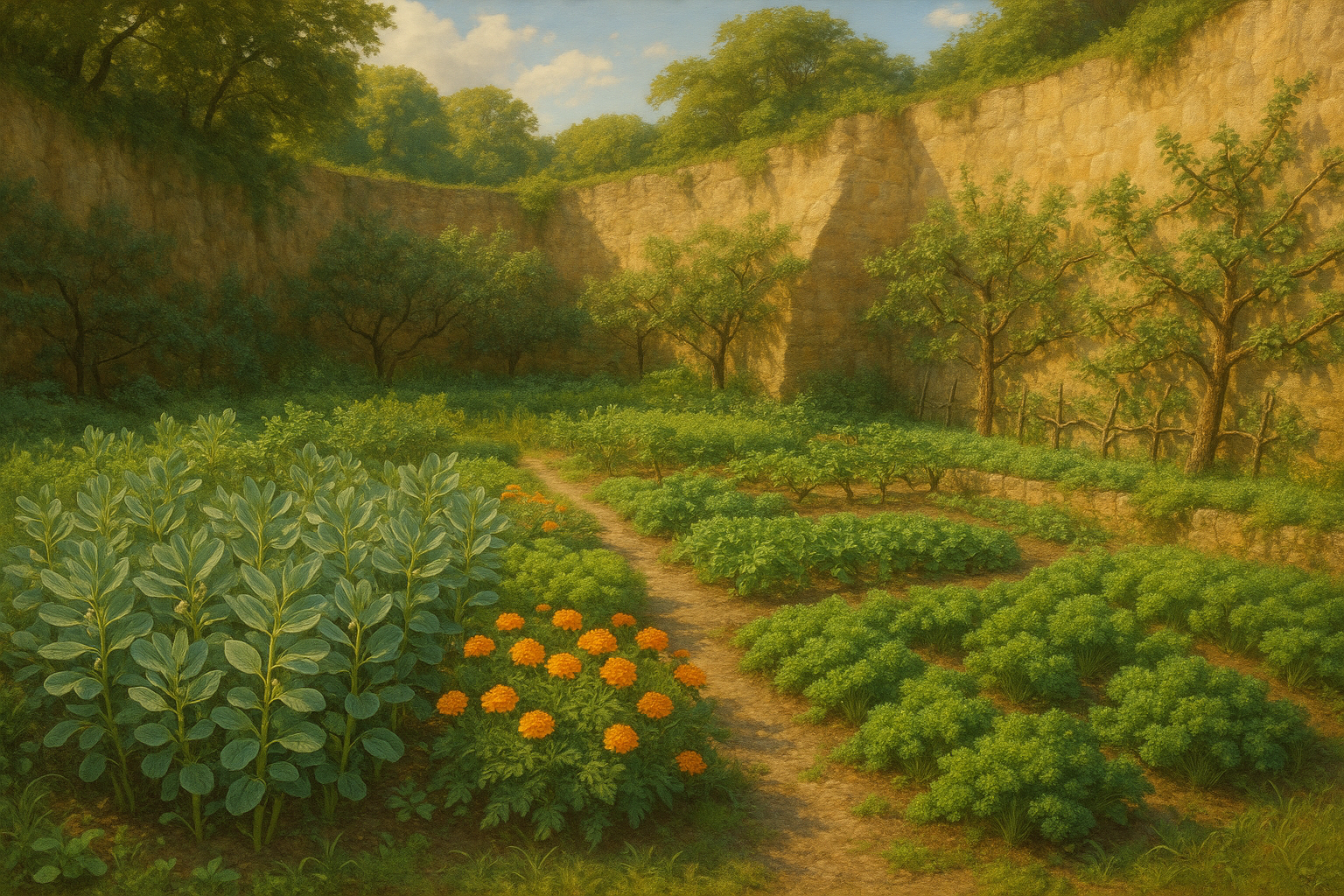
Les Roberges lay in a bowl of long-grassed hills, its small back garden occupying what had once been a quarry. Nico had turned this rocky hollow into a gardener’s triumph. Rows of vegetables filled the space: broad beans with bluish leaves, bright marigolds destined for bean soup, and carefully tended herbs. Against the quarry walls, he trained cherries, plums, and pears, each year gathering crops so plentiful they seemed a gift of the land itself.
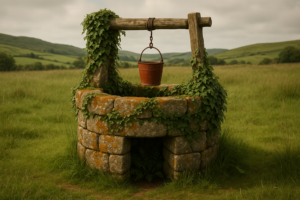
Nearby, in a neighbouring field, stood the granite well—grey, lichen-softened, and crowned with ivy. Guernsey wells, from afar, resemble great stone helmets, but up close they reveal cool ferns draped around their dark entrances. At Les Roberges, a red metal bucket hung from a windlass, always ready to plunge into icy depths.
If the vegetable garden was orderly, the flower garden was quite the opposite. Judie simply hadn’t the time for its constant demands. Its shrubs and tangled summer flowers grew freely, bathing the air with scent and wild beauty.
The Farmhouse at the Heart of It All
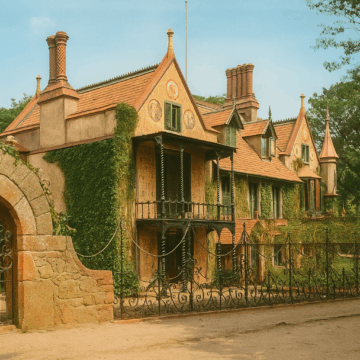
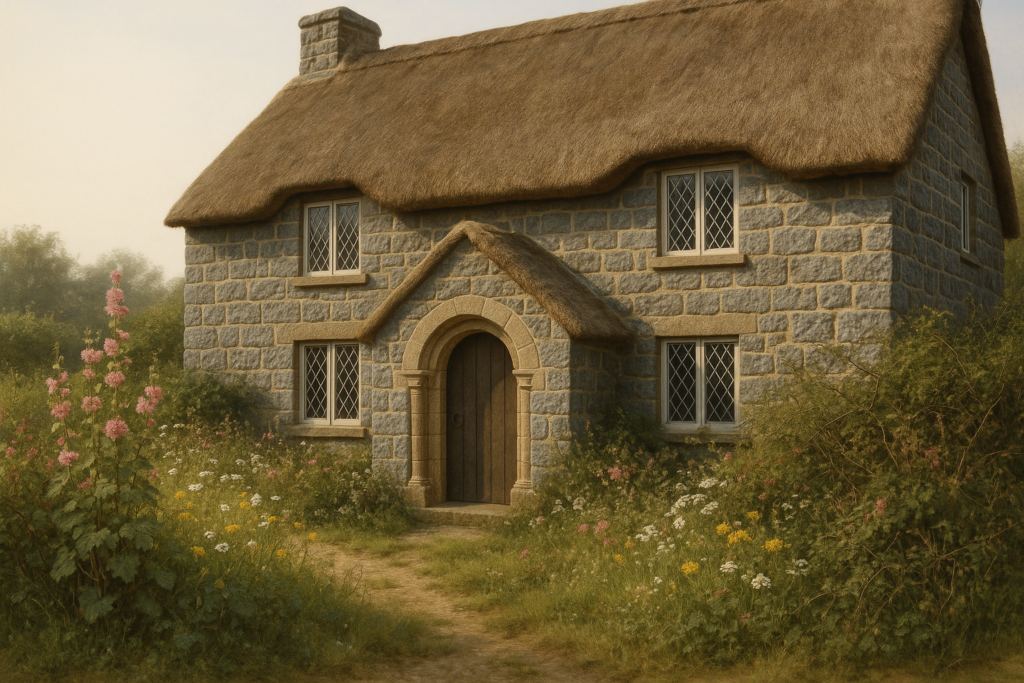
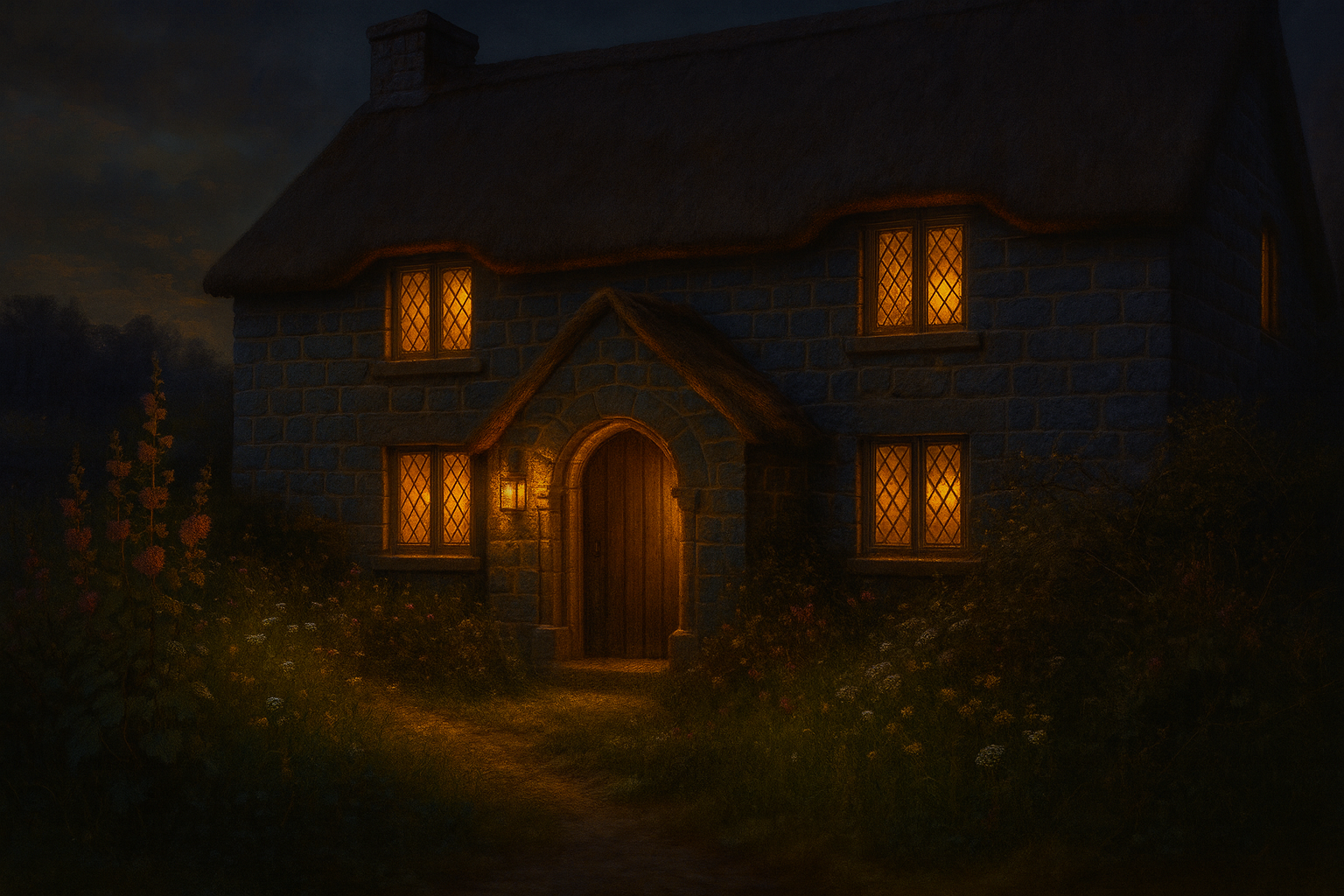
The granite house kept its ancient character through its thatched roof, latticed windows, and Norman archway over the front door. Inside, the entrance hall, with its earthen floor and low timber beams, held little more than milk cans and well-used pans.
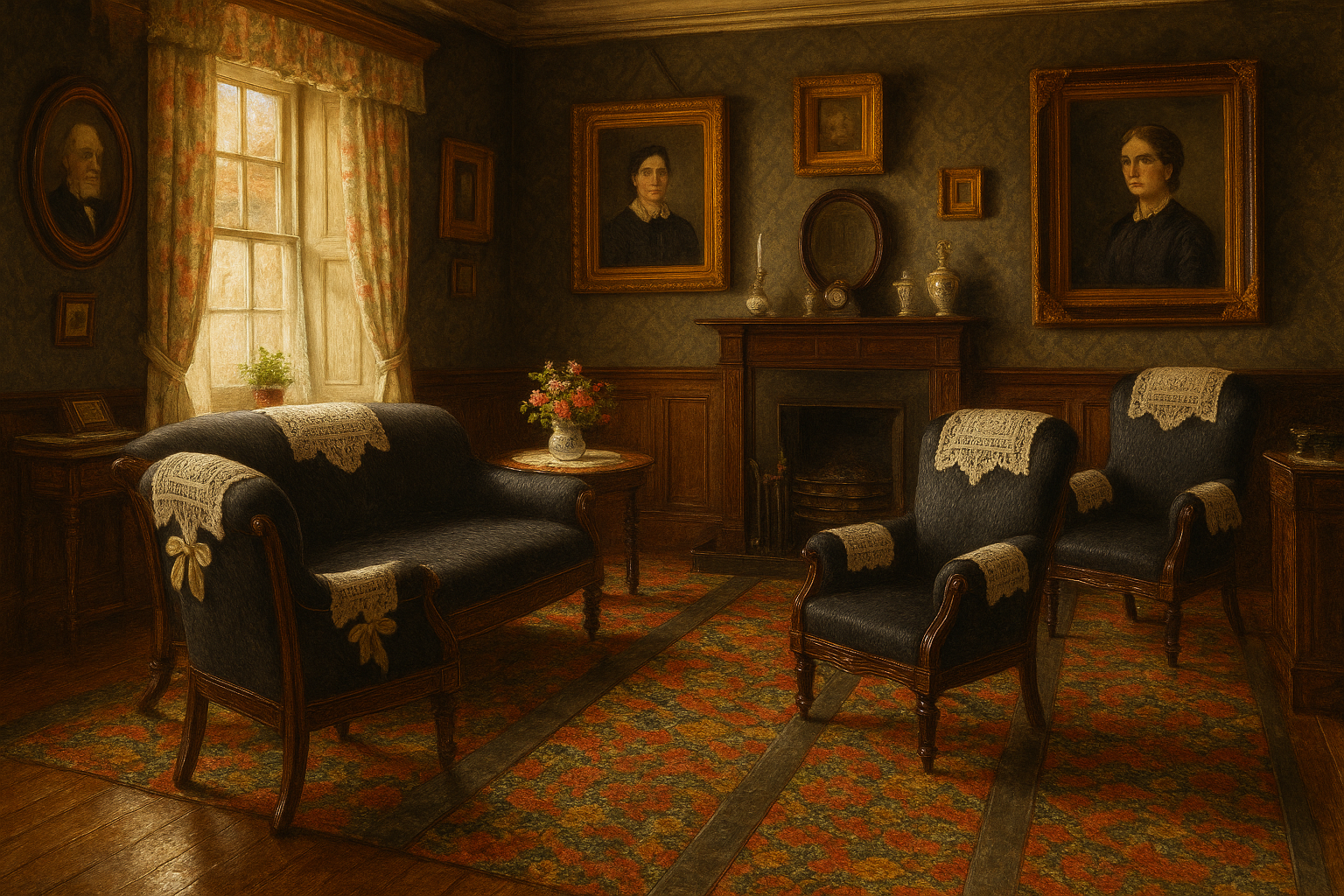
To one side stood the “best parlour,” opened only for funerals and rare formal occasions. Judie guarded it with pride: crocheted antimacassars tied with ribbon, plush photo frames, horsehair chairs, and a gaily patterned carpet protected under strips of oilcloth. It was her vision of gentility.
Across the hall lay the kitchen—the real centre of life. The air was warm and tinged with sea-salt, driftwood, and the earthy richness of the vraic fire, the traditional hearth used before iron ranges became common. Here, cabbage roses knocked impatiently at the glass panes, and shelves held a cheerful disorder of jugs, pans, and everyday necessities.
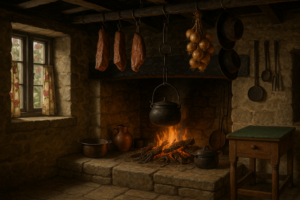
The jonquière, a distinctively Guernsey household fixture, sat near the hearth: a square, bracken-filled wooden frame covered with green baize. Families sat on it in the evenings; babies sprawled across it; young couples perched awkwardly upon its edge when courtship was still new and shy.
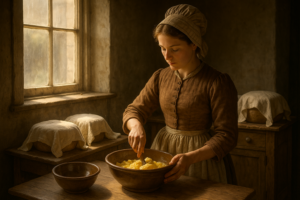
From this kitchen came the golden butter Judie mixed in her brown bowls and the breads and cakes she left to rise beneath coarse towels. Winter bacon hung from the rafters, strings of onions brushed against Nico’s old hats, and the comforting clutter of rural life softened every corner.
Rooms of History and Work
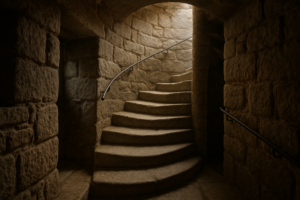
A spiralling stone staircase—centuries old—led to a collection of bedrooms, the guest chamber lined with mismatched chests of drawers echoing different eras of the house. Outdoors, granite barns sheltered clumsy carts and fragrant heaps of straw and hay.
Stone hedges divided the fields, and Nico’s animals grazed tethered, ensuring careful management of every inch of grassland. The small Guernsey cows, with their soft eyes and refined heads, were Judie’s pride. She loved them, as she said in patois, “like my own sisters.”
A Life Beyond the Labour
Though much of Judie’s world revolved around the endless cycle of farm life, her days were not empty of deeper feeling. She held ambitions, affections, resentments, and joys, as vivid and complex as any life shaped by routine and responsibility. Her story at Les Roberges was one of diligence, tradition, and the quiet heroism of rural women whose work supported both family and land.
In the closing years of the 19th century, Les Roberges Farm was more than a workplace. It was a living piece of Guernsey’s cultural tapestry—its language, customs, architecture, and people bound together in a way that still speaks across time.
—E. G. R.