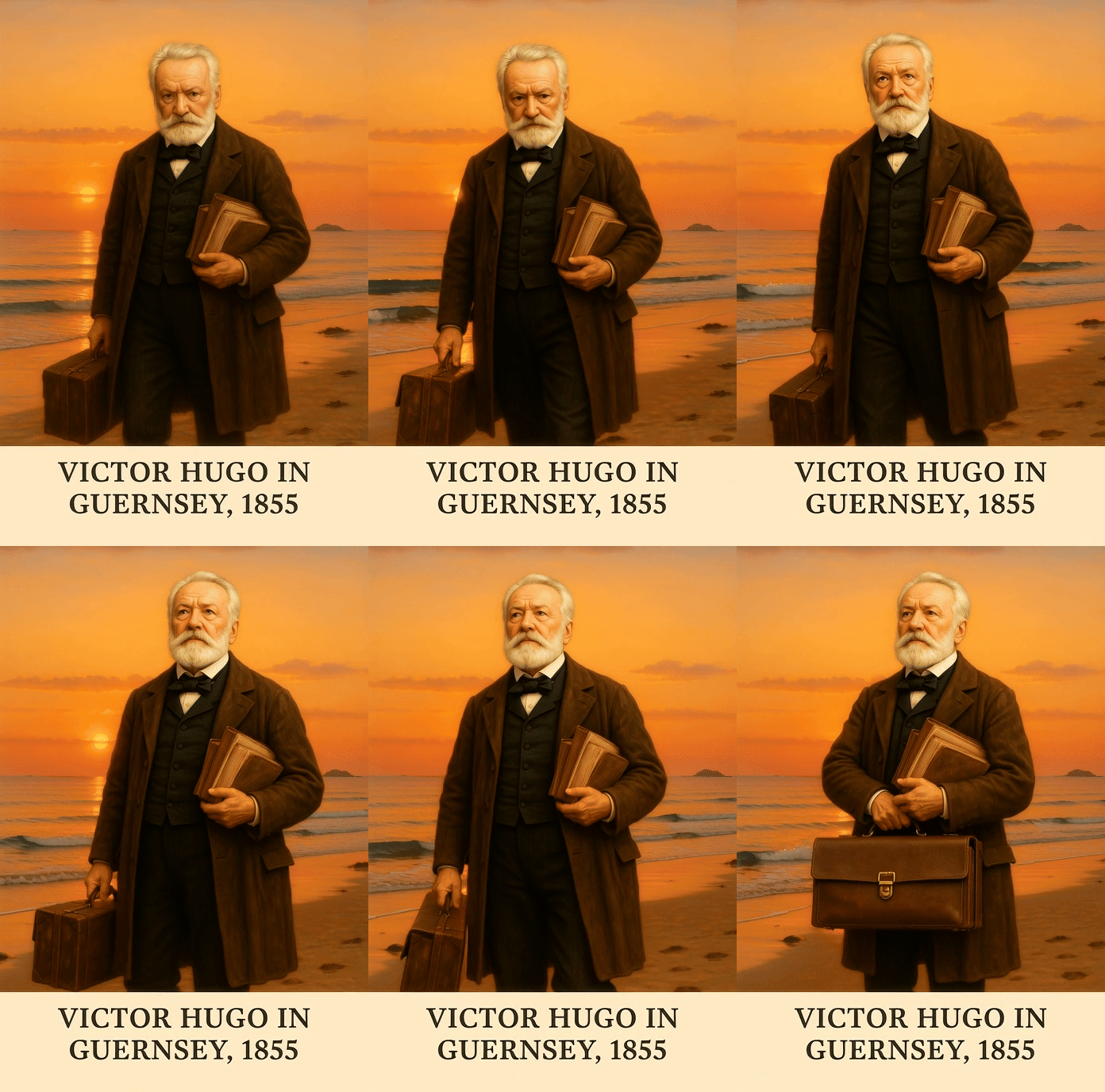
A Day in the Life of Victor Hugo:
Hauteville House, 1860s
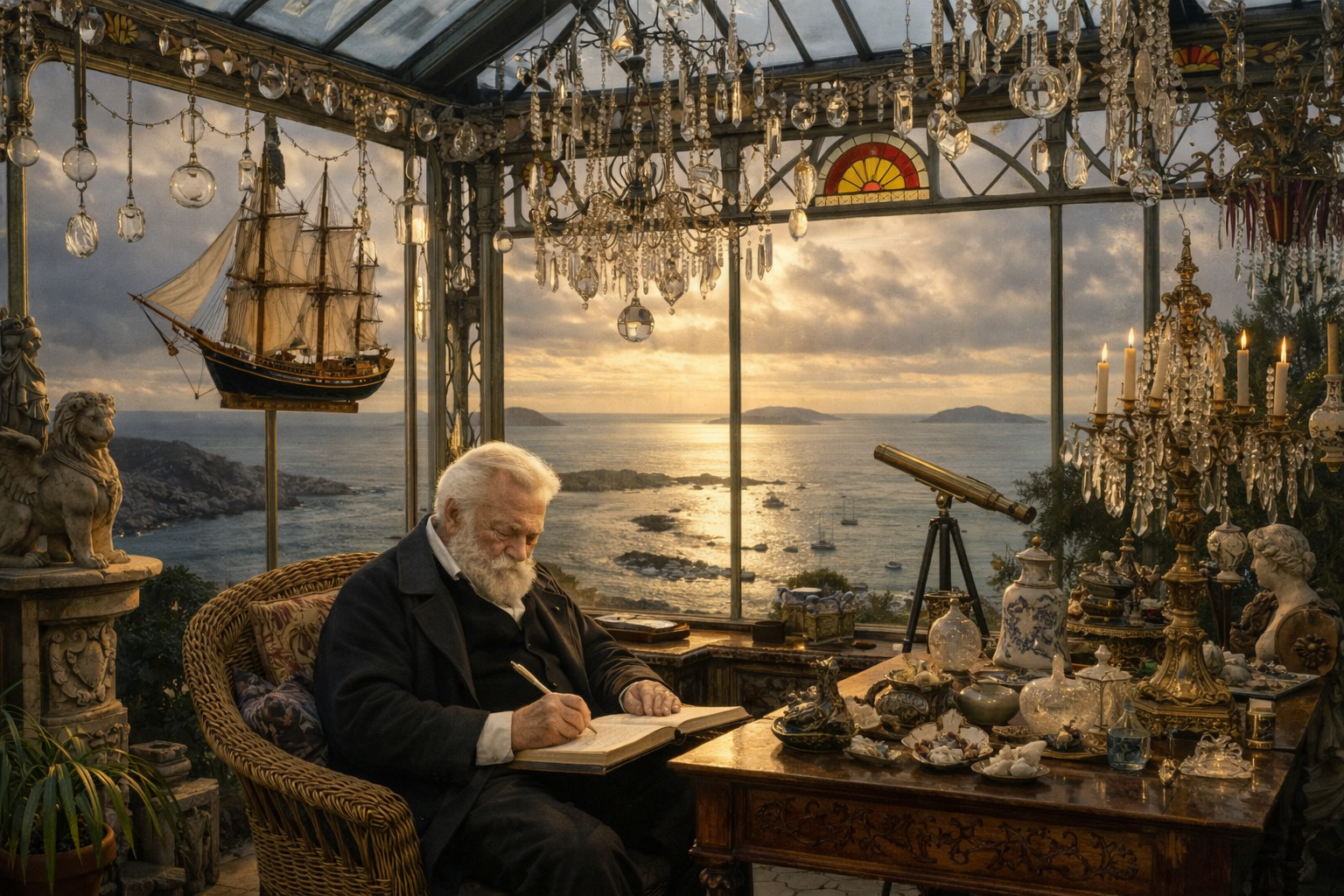
The Exile in his “Crystal Room” above St Peter Port.
If you step into Hauteville House in the 1860s, you don’t just enter a home—you step into a world built by Victor Hugo’s willpower. Here, in his self-made fortress above St Peter Port, life is ruled by routine, ritual, and a fierce belief in the sea, the sun, and the imagination. This is a shadow-log of a typical day in the life of “The Exile” in Guernsey.
❄️ 05:30 — Awakening in the Crystal Room
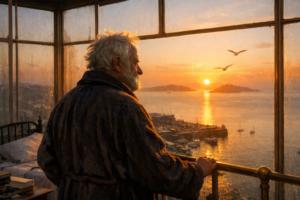
Hugo rises with the sun. He sleeps in the Lookout—also called the Crystal Room—a glass-walled aerie perched at the very top of Hauteville House. The bedroom is shockingly small and almost monastic: a low iron bed, little ornamentation, nothing of the heavy opulence found in the rooms below. The simplicity is deliberate. This is not a place for comfort, but for clarity.
His morning ritual is bracing. He washes with cold water—sometimes even ice—or, when tide and weather agree, he marches straight down to Havelet Bay to plunge into the sea. Hugo is convinced of the medicinal power of cold seawater.
✒️ 06:00 — The Standing Desk and the Work

While the town still sleeps, Hugo is already at full speed. The lookout is extreme—icy in winter, sweltering in summer—but the view is unmatched. Herm and Sark lie like stones in the water. He writes standing up at fold-down wall desks. Coffee is strong, papers carpet the floor, and silence is absolute. Here he forges Les Misérables and The Toilers of the Sea, working with almost military discipline.
🍽️ 12:00 — The Patriarchal Lunch
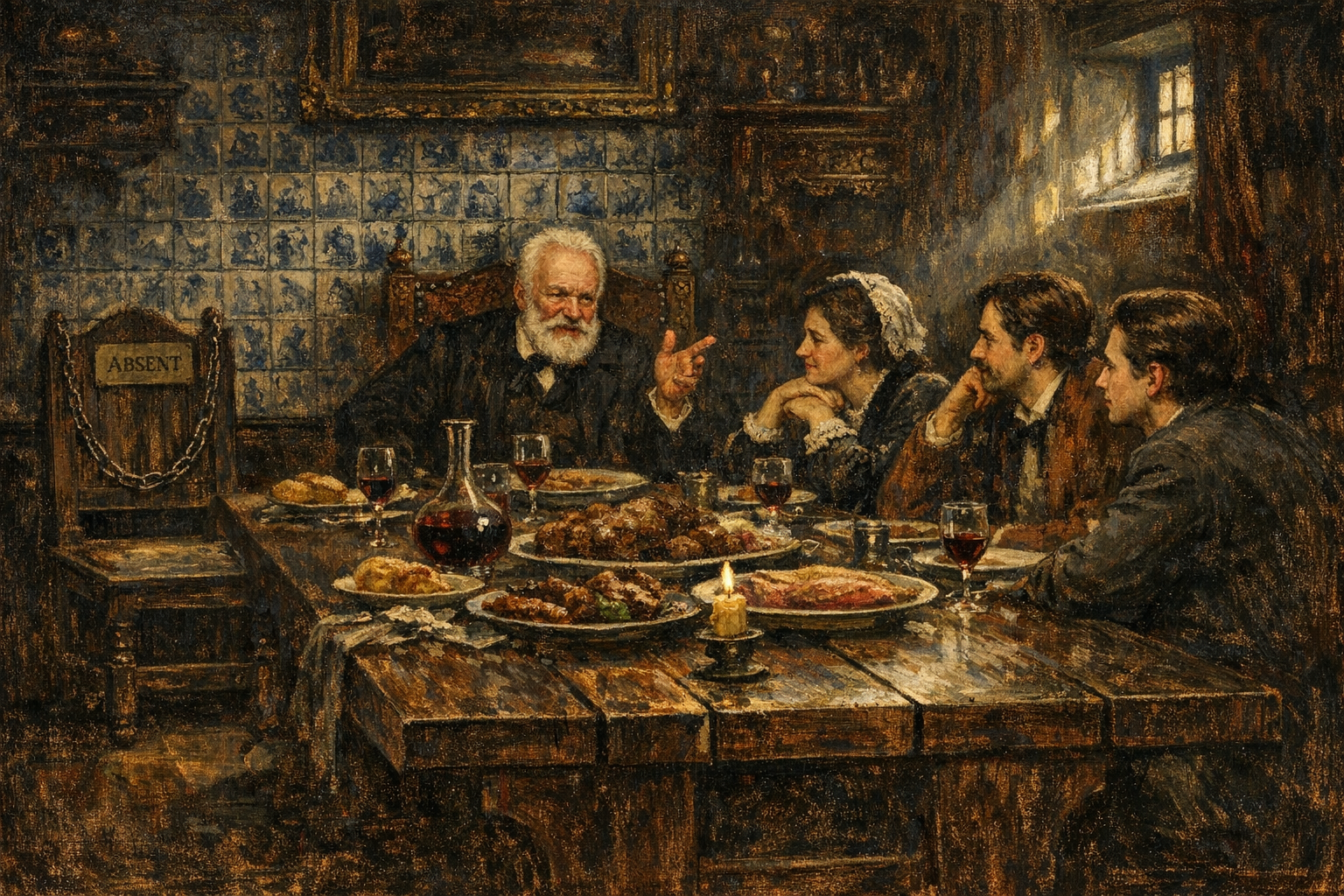
At noon, Hugo descends from his glass tower to the ground-floor dining room. The room itself is theatrical: dark, tile-lined with blue Delftware, dominated by a massive H-shaped table. Meals are robust—roast meats, local fish, generous red wine. Against the wall sits a locked chair reserved for The Absent—the dead and departed who live on in his thoughts.
🌿 14:00 — The Constitutional and Juliette
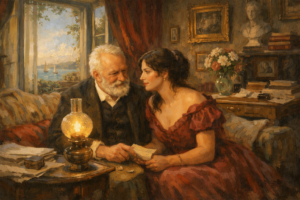
After lunch, the house releases him back into the island. Hugo walks with purpose. He tramps along cliff paths toward Fermain Bay, through sunken lanes and gorse, always watching the sea. Almost inevitably, the walk ends at 20 Hauteville. There lives Juliette Drouet—his mistress, muse, secretary, and constant companion. Afternoons with Juliette are less rigid: talking, reading, and escaping the tensions of his own household.
🍷 18:00 — The Poor Children’s Dinner
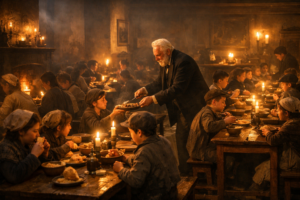
Once a week, the doors of Hauteville House open to the poorest children of St Peter Port. Around forty are welcomed inside. Hugo not only pays for the meal; he serves it himself. He calls this his “duty of brotherhood,” and for him it is not charity for reputation’s sake, but moral obligation.
🕯️ 20:00 — Evenings and Return to the Tower
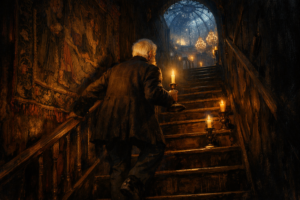
Evenings unfold in the Red Drawing Room or Oak Gallery. There may be readings from his current work, card games like whist, or serious conversation with visiting exiles. Hugo retires early, climbing back up through the layered darkness to his glass lookout.
The Discipline of Exile
Above the roofs of St Peter Port, he returns to his narrow bed, suspended between sea and sky. Tomorrow he will do it again—cold water, standing desk, long walk, and relentless imagination. Exile, for Victor Hugo, is not absence from life.
Discover more from Guernsey Deep Dive
Subscribe to get the latest posts sent to your email.